Message from the Professor of Diagnostic Radiology
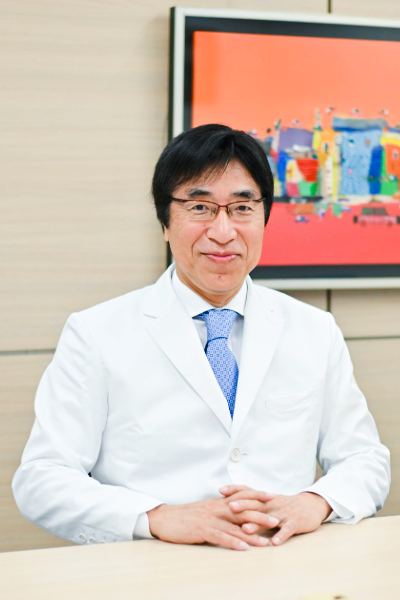
Masahiro Jinzaki, MD, PhD
Professor, School of Medicine Department of Radiology (Diagnostic Radiology)
A department that collaborates with all clinical specialties and contributes to improving quality throughout the hospital.
The Department of Diagnostic Radiology is a central department responsible for imaging diagnoses across nearly all clinical specialties. We provide the latest imaging techniques and accurate interpretations in daily practice. In addition, we perform image-guided therapies (IVR) using catheters and other devices, offering patients minimally invasive procedures.
Based on imaging findings, we hold conferences with various clinical departments to discuss treatment strategies for patients.
This enables us to determine more appropriate therapeutic approaches and contributes significantly to improving the overall quality of care in the hospital. Another distinctive feature of our department is that, through these conferences, we build networks with all clinical specialties and engage across disciplines, thereby gaining a comprehensive perspective of medicine.
Both diagnostic imaging and IVR cover the entire body and a wide range of diseases. Our department has established a system in which specialists are available to address nearly all areas.
Diagnostic Radiologists as Pioneers of the Era
Diagnostic radiology is a discipline that seeks to visualize the human body in a minimally invasive and efficient manner using the latest technologies, while also pursuing the development of safer image-guided therapies. To achieve this, we actively engage in device development and new diagnostic technologies through industry–academic collaboration.
Looking back over the past 30 years, diagnostic imaging has evolved in tandem with advances in computer and related technologies, expanding from two-dimensional to three-dimensional, and further to four-dimensional imaging, always benefiting from cutting-edge innovations.
In recent years, with the growing prevalence of AI and its strong affinity with imaging, diagnostic radiology has been among the earliest specialties to engage in AI development. Indeed, several AI systems with high diagnostic performance have already been developed internationally. However, implementing AI in radiology still faces many challenges. For example, in dermatology or ophthalmology, AI can easily be applied to qualitative assessments of localized lesions. In radiology, however, detection must begin with identifying where the lesion is located. At the detection level, false positives and false negatives remain unavoidable, requiring radiologists to re-interpret the images. Thus, AI has not yet reached the point of significantly reducing the radiologist’s workload.
Although highly developed automated image interpretation technologies have existed for more than 20 years, they have rarely been utilized, underscoring the high hurdles for implementing AI-based automated diagnosis in radiology. Another challenge is the lack of transparency in AI decision-making, highlighting the need for explainable AI.
Nevertheless, by exploring ways to integrate AI into clinical workflows, we expect that AI systems will eventually serve as valuable support tools for image interpretation. In such an era, reduced burdens in interpretation will allow radiologists to devote more time to device development and new diagnostic technologies, thereby creating the diagnostic science of the future.
Fostering Broad Perspectives and Flexibility
Education is a particular priority in our department. We strive to identify the diverse talents of each individual and provide opportunities to nurture them. At the same time, we encourage broad interest in medicine and flexible adaptability by promoting collaborative research with other departments, fostering industry–academic partnerships, and creating environments for collaboration with faculties of science, engineering, and pharmacy.
We actively encourage participation in conferences with other departments and companies. These initiatives are promoted not only for our own staff but also for radiologists nationwide. Examples include imaging conferences held in collaboration with other specialties and the Advanced Medical Imaging Research Association, where participants learn from the forefront of industry and various fields.
We hope to cultivate radiologists who not only acquire high diagnostic and therapeutic skills but also embrace the mindset of leading the times.
The Appeal of Diagnostic Radiology
The appeal of diagnostic radiology includes:
- Direct involvement with cutting-edge devices and the latest therapeutic techniques, allowing physicians to experience the progress of the era firsthand.
- The great sense of fulfillment when guiding patient treatment strategies appropriately through imaging diagnosis.
- The ability to choose areas of specialization according to one’s aptitude, since radiology covers the entire body.
- Diversity, as radiology encompasses medical information systems related to image management, allowing the acceptance of individuals with varied talents.
- Flexible working hours, making it easier to balance professional duties with family life.
Our department also has a high proportion of female physicians, and we accommodate individual circumstances by allowing them to work during feasible hours.
Currently, more than 120 active physicians, including those affiliated with related hospitals, are working at the forefront of clinical practice. With the increasing number of examinations and the employment of radiologists contributing to additional imaging management fees, the demand for radiology in hospitals continues to grow year by year.
We aim to manage our department in a way that fosters unity and a strong sense of belonging among all our members.